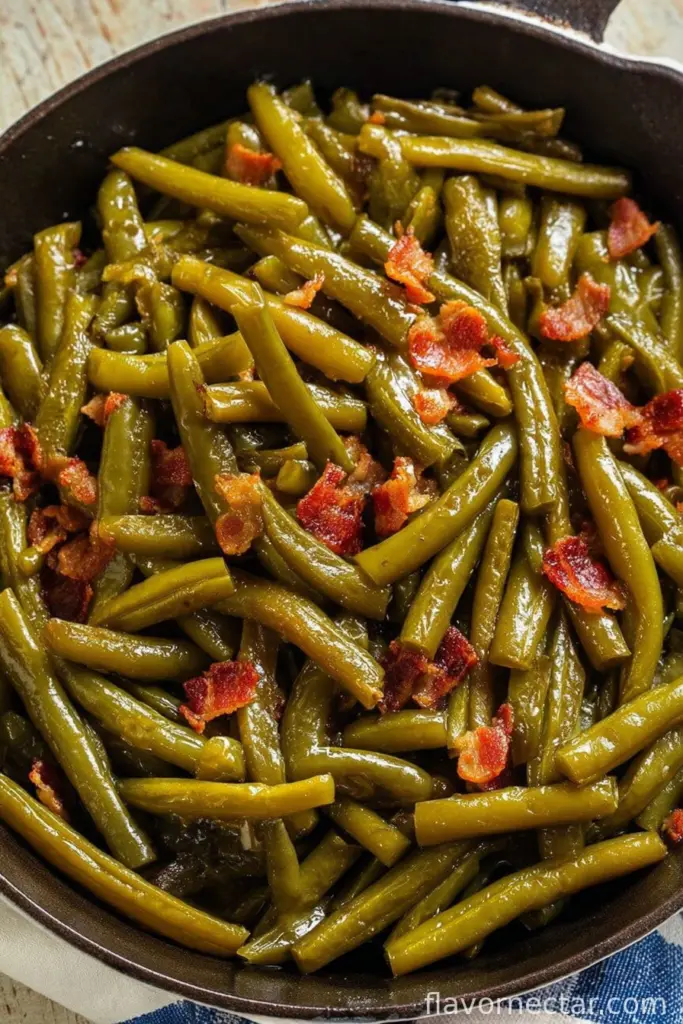
Hey There—Let’s Talk About Texas Roadhouse Green Beans
Alright, here we go. If you’d told me 10 years ago I’d one day be borderline obsessed with green Beans from a chain steakhouse, I’d have probably raised an eyebrow—maybe even two. But here we are. Saw these on the menu at Texas Roadhouse one summer, the kind when you sweat before you even sit down at the booth, and after my first bite, I was like… hold up, why are these Beans so dang good?
So, of course, I went home and spent (too) many hours trying to get them just right. Some attempts were bland, others too bacony (wait, is that possible?); now I feel pretty good about my version. My sister says they taste nearly the same, but—small confession—I sneak in an extra splash of vinegar. Oh! And if you hear the dog bark halfway through, ignore it. He’s just jealous he can’t have these beans.
Why I Make This All the Time
I make these when I want an easy win at dinner—it’s, like, the magic side dish for suspicious veggie eaters. My family goes crazy for this (especially if I double the bacon; I don’t always admit it). Actually, last Christmas, my brother asked, “Can you just make those beans again?”—never mind the turkey.
Sometimes they’re a little salty if I forget to taste before serving, but honestly, you can always add more water and it sorts itself out.
What You’ll Need (And a Few Shortcuts)
- Green beans: Fresh is ideal, but I use canned (2 cans, 14.5 oz each, drained) when I’m in a rush. If you spot French cut at the store, those work great!
- Bacon: 4–5 strips, chopped. Maple bacon’s weird in this, trust me. Regular or thick cut, your call.
- Onion: Half a medium one, diced. Sometimes I just use a big shallot if I’m feeling fancy. (Gramma swears by Vidalia, but I feel like any yellow is fine!)
- Garlic: 2 cloves, minced. Or that jarred minced kind—it beats not using any.
- Chicken broth: 1 cup. If I’m all out, honestly, water + a bouillon cube does the trick just fine.
- Apple cider vinegar: 2 teaspoons. White vinegar works in a pinch—just a little sharper.
- Sugar: 1 teaspoon. Please don’t skip this; it brings that mellow restaurant flavor.
- Salt & freshly cracked pepper: To taste
- Optional add-ins: A shake of red pepper flakes, or even a handful of mushrooms (did that once—odd, but fun).
Alright, Here’s How I Make ‘Em
- Start by frying the chopped bacon right in a large skillet over medium heat. You want it crispy, but don’t burn it—happened to me once, house reeked for days. When it’s crispy, scoop the bacon out with a slotted spoon and set aside. Keep a tablespoon or so of bacon fat in the pan; drain extra if it looks ridiculous.
- Toss in your onions (and mushrooms if you went rogue), cook till soft and kinda golden—about 3 to 5 minutes. Add in garlic for the last minute. Careful, those bits cook fast.
- This is where I usually sneak a taste. Smells incredible already, right?
- Add in the drained green beans, pour in the chicken broth, vinegar, sugar, stir it all around gently. Bring to a gentle simmer—don’t boil the heck out of it! Simmer about 10–12 minutes, lid half on; enough for everything to mingle.
- Season with salt, pepper, and red pepper flakes if you’re in the mood. Stir bacon back in, then let it cook together for another minute or two.
- That’s it. Seriously. Taste, adjust, maybe splash a little more vinegar if you love a tangy kick like me. Serve hot—steamy, glossy, cozy.
Stuff I’ve Learned (Not All the Easy Way)
- If you simmer too hard, the beans get mushy and sad. (Been there… twice, maybe thrice.)
- Actually, I find it works better if you drain the beans really well—the sauce gets richer and not watered down.
- If you’re out of fresh onions, onion powder works. But use it sparingly, or the taste takes over everything else.
Roadhouse Bean Experiments
- One time, I tried adding smoked paprika. Kind of overpowered the whole thing, but maybe it was just my heavy hand with spices.
- Mushrooms: not classic, but somehow delicious in a weird way.
- Turkey bacon? It works, but you lose some depth. Still, for my cousin Jill, it’s a must.
What You’ll Need Kitchen-Wise
- A heavy skillet or saucepot—cast iron if you’ve got it. If not? A decent nonstick or even a saucepan gets you ninety percent there. I once used a Dutch oven just because it was the cleanest, no shame.
- Slotted spoon (if you even remember where you put it) for the bacon.

Storage (But They Never Last Long For Me!)
If, and that’s a big if, you have leftovers, just chuck them in an airtight container; they keep in the fridge about three days. But honestly, in my house they’re gone before sun-up.
Serving—My Favorite Ways
Always serve these steaming hot—they lose their sparkle when cold. We pile ‘em next to mashed potatoes or barbecue chicken, but sometimes, I just sneak a bowlful at 11pm on its own. My uncle eats them straight out of the fridge; weird, but apparently legit.
Pitfalls and Little Tricks (Learned the Hard Way)
- Don’t rush the bacon. I once cranked the heat and ended up with coal nuggets. Just… patience pays here.
- If you use canned beans, rinse them or your sauce will be way saltier than you expect. Trust me, that’s a mistake I keep repeating every so often—why, I do not know.
- And don’t forget to taste and tweak at the end. Sometimes all it wants is a touch more sugar or another grind of pepper. Try not to overthink it!
Got Questions? Here’s What Folks Have Asked Me
Can I make these vegetarian? Absolutely! Just skip the bacon, start with olive oil, and maybe add some smoked salt or try a plant-based bacon like pan-crisped tempeh. Doesn’t taste quite the same, but still delicious.
Can you freeze ’em? Eh… You could, I suppose. The beans tend to get a little mushy form the cold, so I wouldn’t serve that to guests, but for a solo lunch? Why not.
What about using an Instant Pot? Oh, for sure—if you’re in a hurry. Try sauté function for bacon and onions, then pressure cook just a couple minutes. Results are a tiny bit softer than stovetop, though.
Is canned really as good as fresh? If you buy good canned beans (Del Monte isn’t bad!), it’s pretty dang close. If overly firm beans bug you, canned’s actually better in this.
Anything I should serve with these? Brisket, absolutely. Or cornbread if you want a whole comfort vibe—Jalapeño cornbread from Simply Recipes is wild with beans!
Finally, A Quick Digression
Oh, side note! Have you ever noticed how green beans star in, like, three totally different holiday casseroles? Someone, somewhere, decided beans go with almost anything. Not sure I agree, but I respect the hustle.
Anyway—hope you love these Texas Roadhouse Green Beans as much as my family (and my dog, who never quits begging). Let me know how it turns out! Or if you find a way to sneak in cheese without everyone noticing, I absolutely want to hear about it.
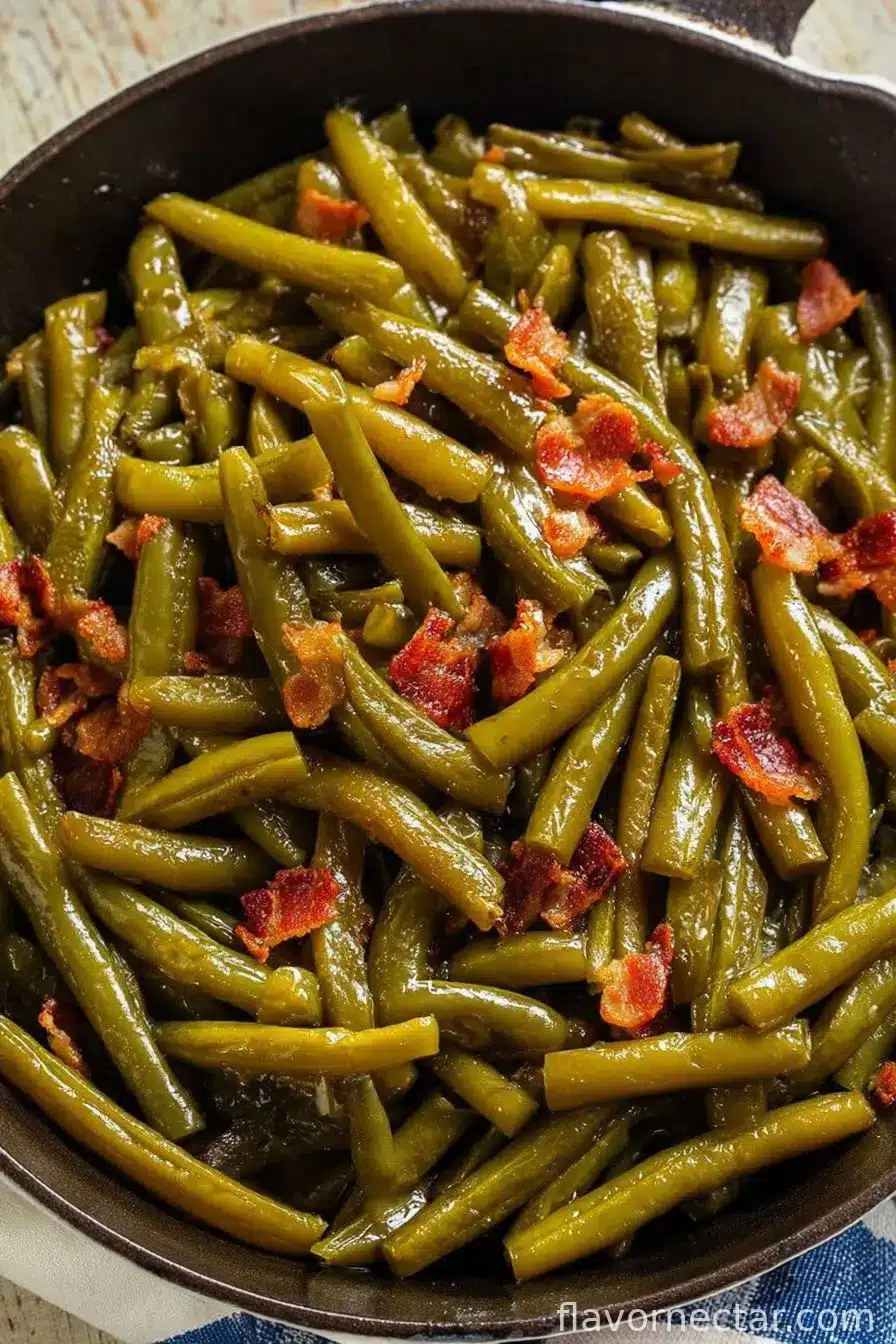
Ingredients
- 1 pound fresh green beans, trimmed
- 4 slices bacon, chopped
- 1/2 medium yellow onion, diced
- 2 cloves garlic, minced
- 2 cups chicken broth
- 1/2 teaspoon black pepper
- 1/2 teaspoon salt
- 1 tablespoon unsalted butter
Instructions
-
1In a large skillet or saucepan, cook chopped bacon over medium heat until crispy. Remove and set aside, leaving the bacon fat in the pan.
-
2Add diced onion to the pan and sauté in the bacon fat for about 2-3 minutes until softened. Add minced garlic and cook for 30 seconds.
-
3Add the trimmed green beans to the pan, then pour in the chicken broth. Stir in salt and black pepper.
-
4Bring to a simmer, cover, and cook for 20-25 minutes, stirring occasionally, until the green beans are tender.
-
5Drain most of the liquid, then in the last minute of cooking, stir in butter and cooked bacon. Serve hot.
CLICK FOR NUTRITION INFO
↑
Approximate Information for One Serving
Serving Size:
1 serving
Calories:
130 caloriescal
Protein:
5gg
Fat:
7gg
Saturated Fat:
0g
Trans Fat:
0g
Cholesterol:
0mg
Sodium:
0mg
Potassium:
0mg
Total Carbs:
11gg
Fiber:
0g
Sugar:
0g
Net Carbs:
0g
Vitamin A:
0
Vitamin C:
0mg
Calcium:
0mg
Iron:
0mg
Nutrition Disclaimers
Number of total servings shown is approximate. Actual number of servings will depend on your preferred portion sizes.
Nutritional values shown are general guidelines and reflect information for 1 serving using the ingredients listed, not including any optional ingredients. Actual macros may vary slightly depending on specific brands and types of ingredients used.
To determine the weight of one serving, prepare the recipe as instructed. Weigh the finished recipe, then divide the weight of the finished recipe (not including the weight of the container the food is in) by the desired number of servings. Result will be the weight of one serving.
Did you make this recipe?
Please consider Pinning it!!