The Story Behind This Pizza (Or: That Time I Burnt a Crust)
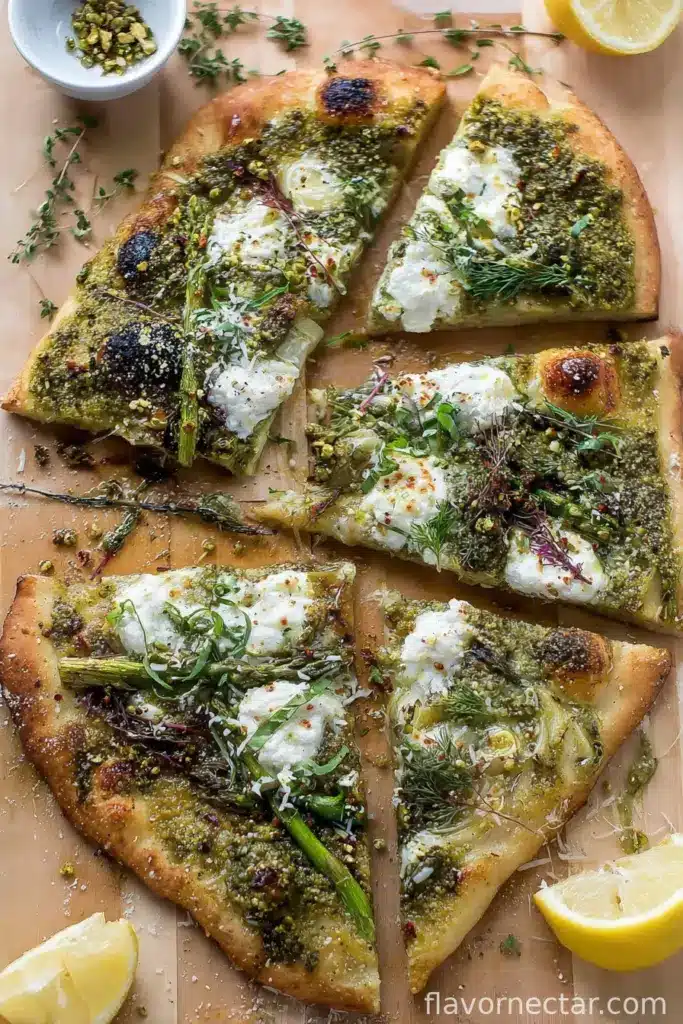
Every spring, when asparagus show up looking all perky at my local market, I start plotting pizza night. This whole obsession started last year after, well, a slightly burnt-crust incident (I still maintain it was the oven’s fault) that turned into a surprisingly popular dinnertime hit. Now, this Spring Pistachio Pesto Pizza with Asparagus and Ricotta is something I actually look forward to making – mostly because it feels like eating spring on a homemade crust. Plus, who can resist an excuse to eat Pesto by the spoonful? (Not me, that’s for sure.)
Why I Keep Making This Pizza Again and Again
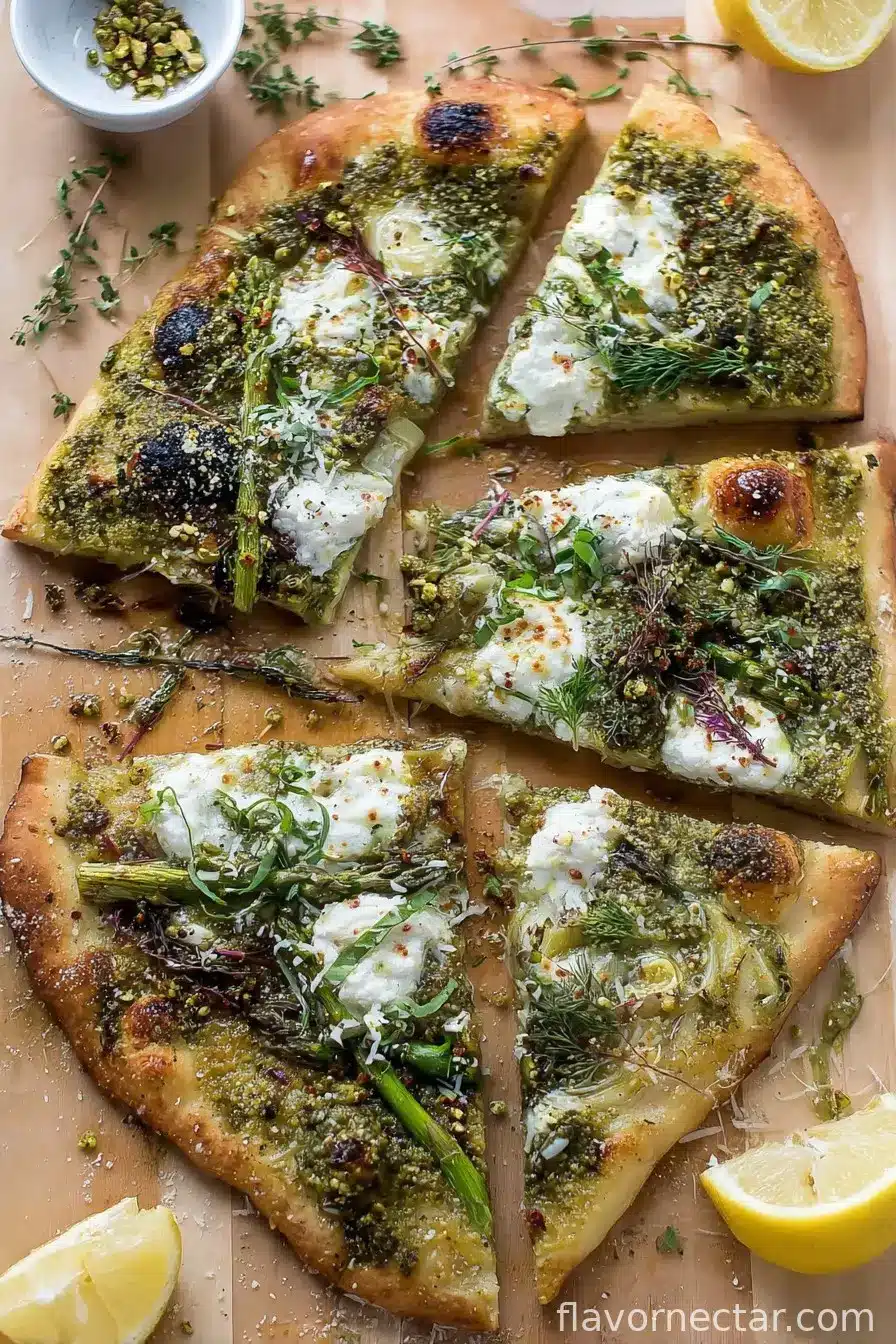
I make this when the weather gets sunny and my kitchen suddenly feels too small for big, heavy meals. My family goes bananas for this pizza because it’s creamy, crunchy, light – and you don’t walk away feeling like you’ve swallowed a bowling ball. It’s also a handy trick for using up that last batch of Pesto—I always make too much. At first, I used to struggle with soggy centers, but after a couple of wonky experiments (including one with a store-bought pizza base that still gives me nightmares), I finally found what works. Oh, and bonus points: this thing looks fancy enough for guests but is totally simple enough for a distracted Tuesday night.
What You’ll Need (Swaps Galore!)
- 1 ball pizza dough (homemade or store-bought – honestly, both get you there; my grandma swears by her own but I grab Trader Joe’s if I’m feeling lazy)
- 1/2 cup shelled pistachios (unsalted; I sometimes use almonds if I forgot pistachios – works but just not as fun)
- 2 packed cups fresh basil leaves
- 2 garlic cloves, peeled
- 1/3 cup grated parmesan (or pecorino; I once subbed nutritional yeast for my vegan cousin – not quite the same punch, but it did the trick)
- 1/2 cup olive oil (but honestly I don’t measure, just glug until it looks right)
- 1/2 teaspoon fine sea salt (plus more for sprinkling)
- 1 big bunch asparagus (about 10–12 thin stalks – snap off the woody ends)
- 1/2 cup fresh ricotta cheese (curds are great too, but I go for the good stuff from the fancy fridge)
- 1 small lemon (zest and juice – but sometimes I skip the juice and don’t miss it)
- Red pepper flakes (optional – my kids complain but I love the kick)
Let’s Make This Spring Pistachio Pesto Pizza!
- Preheat your oven to its hottest setting (mine goes to 500°F but anything above 450°F gets the job done; this is where I open all the windows).
- If you’ve got a pizza stone, let that thing heat up in the oven. Don’t have one? A regular old baking sheet, flipped upside down, works in a pinch (spoken from experience – it’s a bit rustic, but who cares).
- Next, make the pistachio pesto: toss pistachios, basil, garlic, parmesan, olive oil, and a pinch of salt into a food processor. Blitz until it looks like a thick, spreadable green paste. Sometimes it needs more oil – trust your gut. And yes, you get to taste here (I always do).
- Roll or stretch your dough into a rough circle or rectangle (pizza’s forgiving, honestly)—and if it fights you, just let it rest a minute.
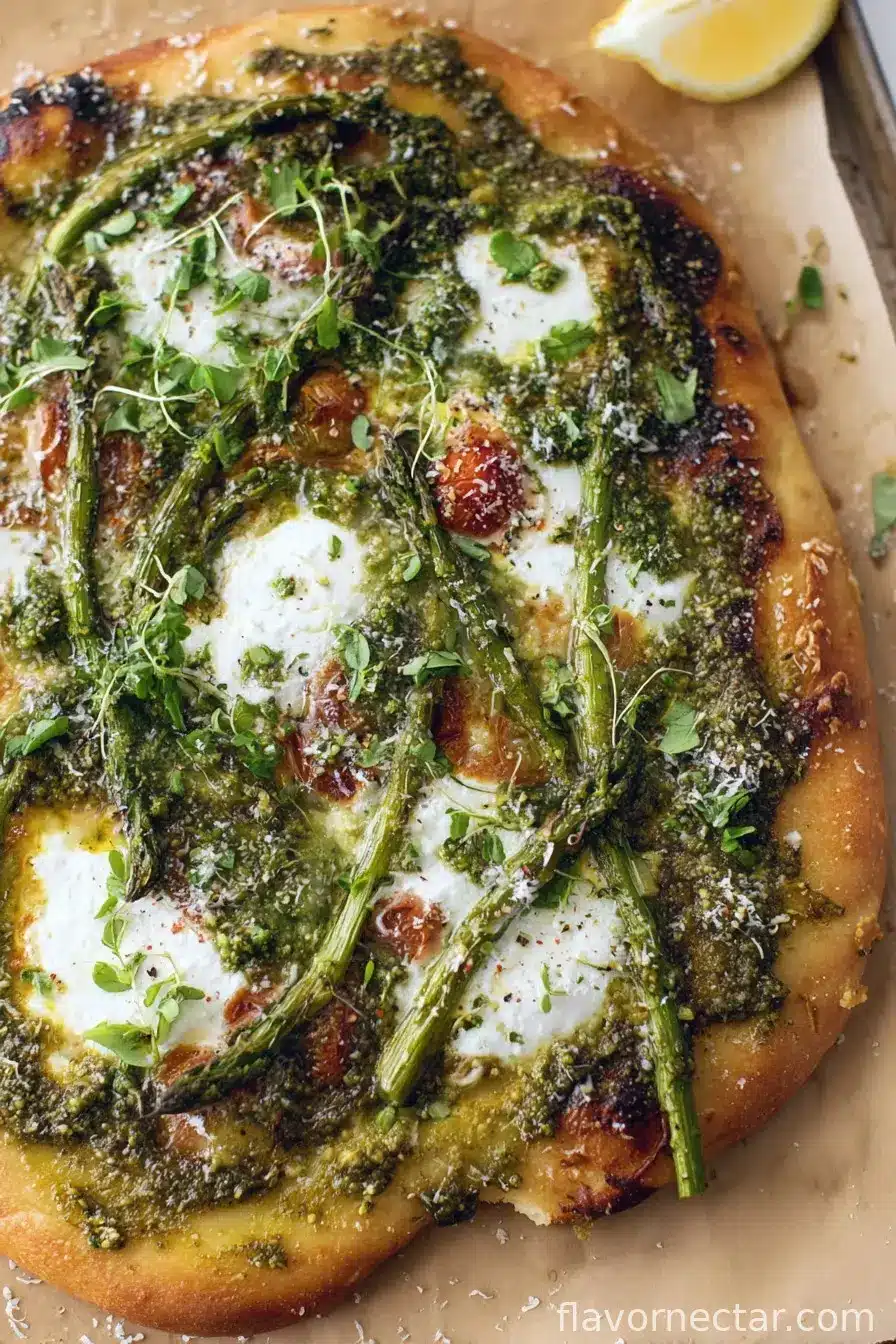
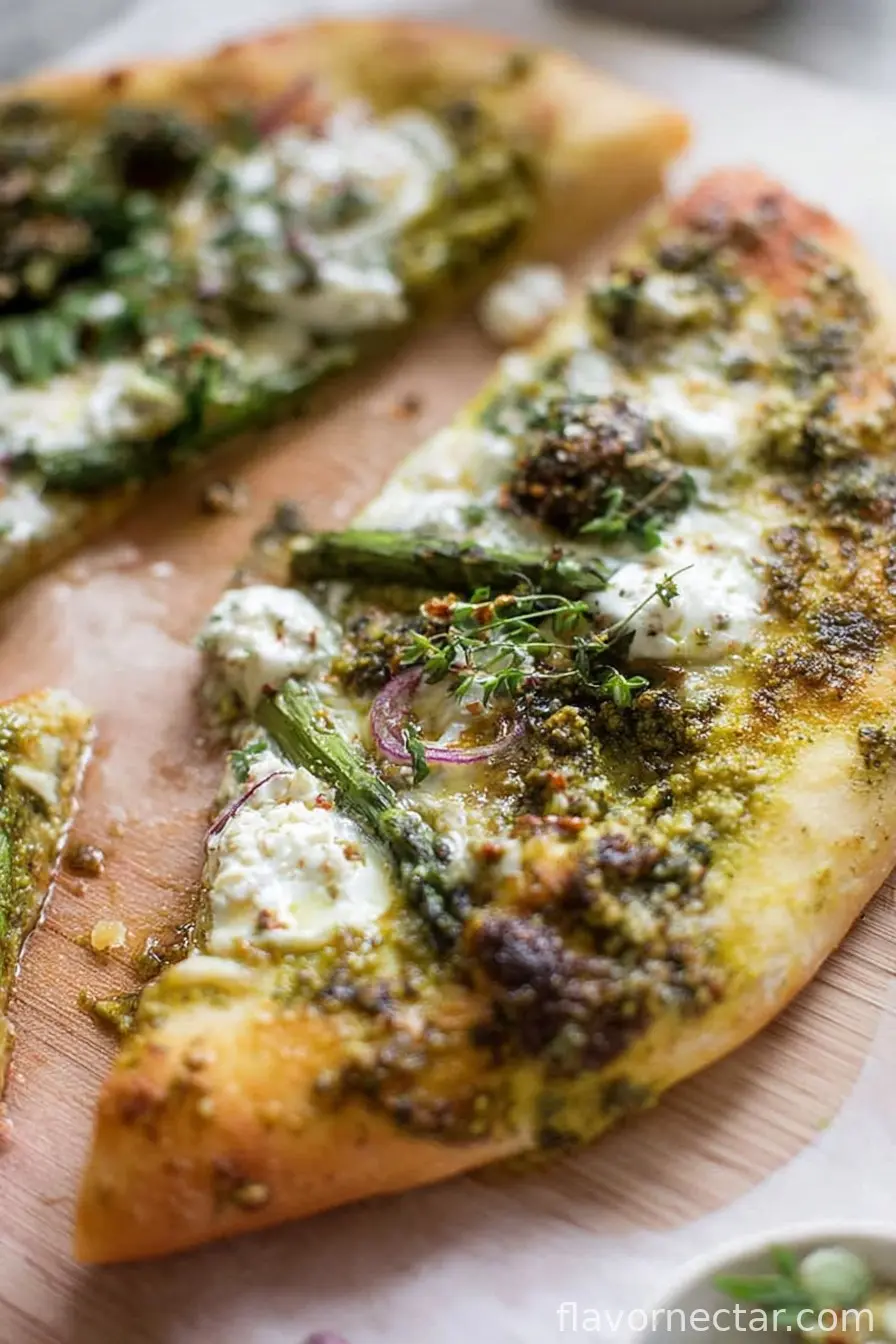
- Slather (be generous!) pesto all over the dough, leaving a border. Dot with little blobs of ricotta all over—scatter them like you’re tossing confetti at a wedding.
- Arrange the asparagus spears on top, whole or sliced thin, whichever looks nice to you. Give everything a little sprinkle of salt and maybe a drizzle more oil if you’re feeling sassy.
- Slide the pizza onto your hot stone or upside-down tray and bake for 12–15 minutes, until the crust is golden and the asparagus looks a little blistered. Don’t panic if it bubbles or gets spots – that’s character!
- Pull it out, zest lemon over the top while it’s still warm, and add a dusting of red pepper flakes if you like.
- Slice up and eat as soon as it doesn’t burn your tongue (though I never wait long enough).
Honestly Useful Notes
- If your pesto seems too thick, just add a splash of water; actually, I sometimes add a little more lemon juice if it looks dull.
- Don’t stress if your crust isn’t a perfect circle. I used to care, but now I call it “artisan” and move on.
- I’ve found using thin, young asparagus makes for the sweetest bite; the fat ones get a bit chewy unless you slice them thin.
- If you forget the lemon, don’t worry, but it does add a zing I miss when it’s not there.
How I’ve Tweaked (And Occasionally Flubbed) This Pizza
- I tried goat cheese instead of ricotta once—too tangy for my taste, but if that’s your thing, don’t let me stop you.
- Sunflower seeds in the pesto work if pistachios are out of reach, but the flavor’s a touch earthier, just so you know.
- I tried grilling the pizza on the barbecue last June. Was a scorcher. It kind of worked but, eh, the crust went a bit too char. Not my finest hour.
Equipment You (Might) Need
- Pizza stone (best if you have it), but a baking sheet upside-down totally works. I once even used a heavy cast iron pan – bit of a faff, but in a pinch, why not?
- Food processor for the pesto (though I have bashed it together with a mortar and pestle – tough on the wrists but satisfying if you need to vent)
- Rolling pin, but honestly, hands are fine
Storing the Leftovers (Not That I’ve Ever Had Many)
If you manage to have some leftover, store slices in the fridge, wrapped up. It’ll taste pretty good cold or reheated the next day, maybe even better? But honestly, in my house it never lasts more than a day! If you freeze it, the ricotta gets a bit weird, fair warning.
How We Serve It Up
I usually cut it into wonky squares (the corner bits are always fought over) and plonk a big green salad on the table. Sometimes we do it picnic-style out back if the sun’s out – and if you serve it with a cold beer or a fizzy lemonade, even better.
Things I Wish I’d Known (A.K.A. Pro Tips I Learned the Hard Way)
- Don’t rush letting your dough rest after stretching – if you try to force it, it just keeps springing back. I once rushed this and regretted it because the crust got tough and chewy.
- Go generous on the olive oil in the pesto; the pizza can look dry otherwise, and nobody likes a dry pizza.
- Always zest the lemon while it’s hot—trust me, the aroma hits different.
Real Questions People Have Actually Asked Me
- Can I use store-bought pesto? – Of course you can. It’s a bit different but way less fuss. Jarred stuff is handy; just add extra lemon zest to wake it up.
- Does this work with gluten-free dough? Yes, but, you know, texture’s different – still good, just not chewy. I’ve had decent luck with the Cup4Cup brand but maybe you know a better one?
- Can I prep it ahead? Sort of! You can make the pesto up to 3 days before. Assembling and baking is best done right before eating, though.
- What if I don’t like asparagus? – Sub in zucchini ribbons or even snap peas! Or, to be honest, just do more pesto and cheese and call it a day.
- Do I have to use ricotta? – Nah, but it’s creamy and dreamy. Feta’s saltier, keep that in mind. Cream cheese works in a pinch, just make blobs instead of spreading.
Anyway, if you’ve gotten this far, congrats – you’ve read the ramblings of someone who spends way too much time thinking about pizza toppings. Now go make some and let yourself get a little messy – it’s spring after all.
Ingredients
- 1 ball pizza dough (homemade or store-bought)
- 1/2 cup shelled pistachios (unsalted)
- 2 packed cups fresh basil leaves
- 2 garlic cloves, peeled
- 1/3 cup grated parmesan or pecorino
- 1/2 cup olive oil
- 1/2 teaspoon fine sea salt (plus more for sprinkling)
- 1 big bunch asparagus (about 10–12 thin stalks, woody ends snapped off)
- 1/2 cup fresh ricotta cheese
- 1 small lemon (zest and juice)
- Red pepper flakes (optional)
Instructions
-
1Preheat your oven to its hottest setting (mine goes to 500°F but anything above 450°F gets the job done; this is where I open all the windows).
-
2If you’ve got a pizza stone, let that thing heat up in the oven. Don’t have one? A regular old baking sheet, flipped upside down, works in a pinch (spoken from experience – it’s a bit rustic, but who cares).
-
3Next, make the pistachio pesto: toss pistachios, basil, garlic, parmesan, olive oil, and a pinch of salt into a food processor. Blitz until it looks like a thick, spreadable green paste. Sometimes it needs more oil – trust your gut. And yes, you get to taste here (I always do).
-
4Roll or stretch your dough into a rough circle or rectangle (pizza’s forgiving, honestly)—and if it fights you, just let it rest a minute.
-
5Slather (be generous!) pesto all over the dough, leaving a border. Dot with little blobs of ricotta all over—scatter them like you’re tossing confetti at a wedding.
-
6Arrange the asparagus spears on top, whole or sliced thin, whichever looks nice to you. Give everything a little sprinkle of salt and maybe a drizzle more oil if you’re feeling sassy.
-
7Slide the pizza onto your hot stone or upside-down tray and bake for 12–15 minutes, until the crust is golden and the asparagus looks a little blistered. Don’t panic if it bubbles or gets spots – that’s character!
-
8Pull it out, zest lemon over the top while it’s still warm, and add a dusting of red pepper flakes if you like.
-
9Slice up and eat as soon as it doesn’t burn your tongue (though I never wait long enough).
CLICK FOR NUTRITION INFO
↑
Approximate Information for One Serving
Serving Size:
1 serving
Calories:
410 caloriescal
Protein:
13gg
Fat:
24gg
Saturated Fat:
0g
Trans Fat:
0g
Cholesterol:
0mg
Sodium:
0mg
Potassium:
0mg
Total Carbs:
38gg
Fiber:
0g
Sugar:
0g
Net Carbs:
0g
Vitamin A:
0
Vitamin C:
0mg
Calcium:
0mg
Iron:
0mg
Nutrition Disclaimers
Number of total servings shown is approximate. Actual number of servings will depend on your preferred portion sizes.
Nutritional values shown are general guidelines and reflect information for 1 serving using the ingredients listed, not including any optional ingredients. Actual macros may vary slightly depending on specific brands and types of ingredients used.
To determine the weight of one serving, prepare the recipe as instructed. Weigh the finished recipe, then divide the weight of the finished recipe (not including the weight of the container the food is in) by the desired number of servings. Result will be the weight of one serving.
Did you make this recipe?
Please consider Pinning it!