Let’s Talk Guinness Corned Beef—My Kinda Comfort Food
I always joke that the smell of this Guinness corned beef bubbling away takes me back—well, mostly back to my college days, but also to my uncle’s kitchen on St. Patrick’s Day, where there was a steady stream of chat, spilled beer, and something or other simmering that made everyone hungry a good hour before dinner. My first attempt frankly, was a train wreck (spoiler: adding double Guinness doesn’t make it twice as good—unless you like things extra-bitter!), but now it’s become a solid go-to for lazy Sundays when I want something low-fuss with leftovers for days. Or…hours, depending how fast everyone dives in.
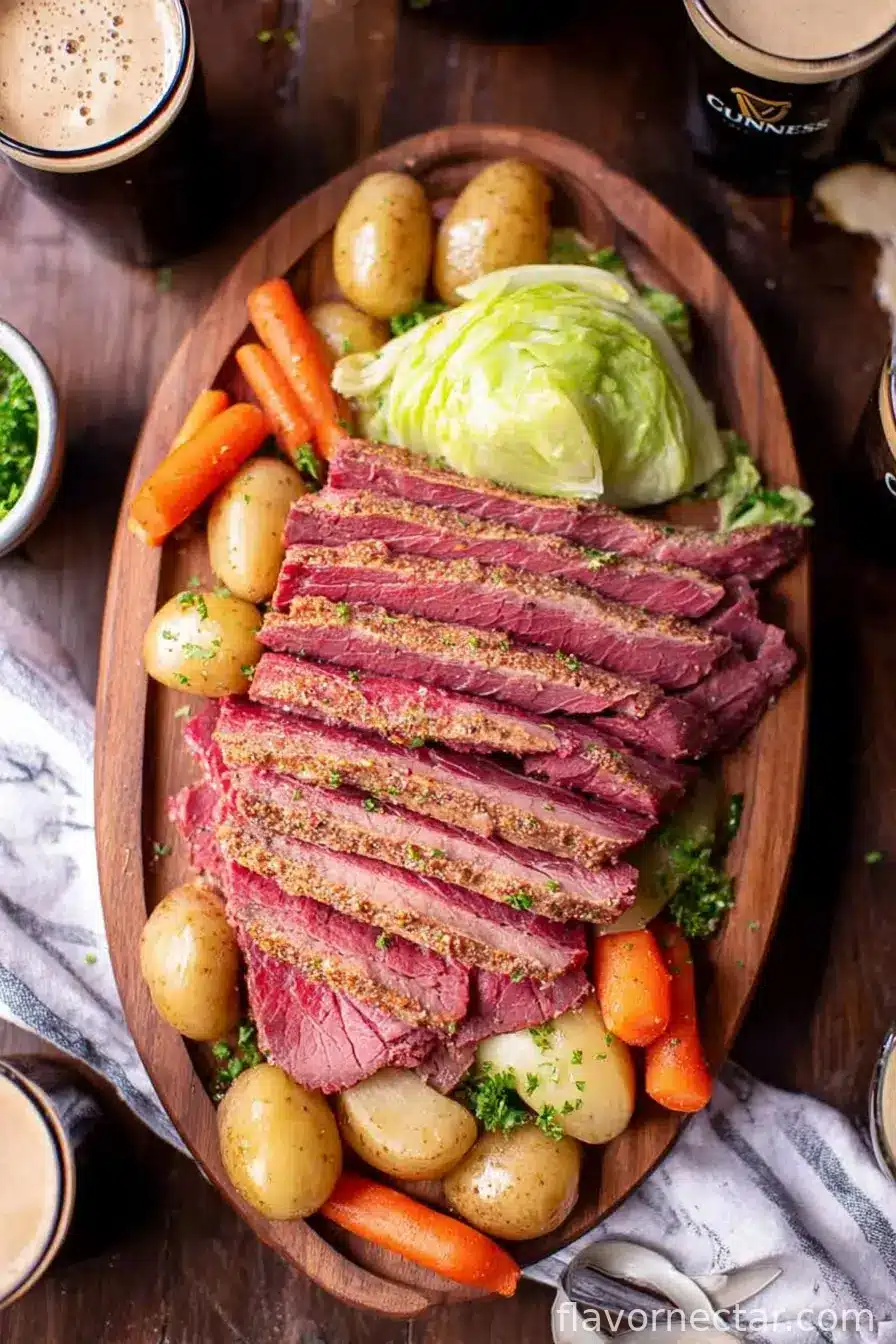
Why You’ll Love This (Or at Least, Why I Do)
I make this when it’s cold, when I need to feed a crowd without babysitting the stove, or honestly, whenever corned beef goes on sale. Some folks ask, “Isn’t Guinness a bit much?” But that’s the magic—it soaks in, gives a malty sort of edge without being boozy. My family goes wild for it. I love how the beef takes on those slightly sweet, roasty notes (plus the leftovers for sandwiches…heaven).
And if you’ve been burned by dry corned beef before, fair warning: patience is truly key here—I’ve tried to rush it, regretted it. Every. Single. Time.
What You’ll Need (No, You Don’t Have to Use Expensive Beer!)
- 1 (3-4 lb) corned beef brisket, with spice packet (or toss in your own handful of peppercorns if that’s missing—no big deal)
- 1 (12 oz) bottle Guinness stout (sometimes I use a random dark beer if I’m out—works fine, though don’t tell my Irish friend that)
- 4 cups water (tap is fine, unless your water tastes weird, then maybe filtered)
- 1 large onion, peeled & quartered (yellow or sweet—I never notice much difference, if I’m honest)
- 4 garlic cloves, smashed (though I’ve used pre-minced garlic in a pinch, it’s all good)
- 5-6 carrots, chunked (baby carrots if I’m in a real rush)
- 6-8 small potatoes, halved or quartered (whatever’s lurking in your bin—red, Yukon, even russets)
- 1/2 head green cabbage, cut into wedges (the other half usually ends up as next-day slaw)
- 2 bay leaves (once I used 3, but didn’t notice a difference; use what you’ve got)
How To Actually Pull This Off (No Fuss)
- Plop the corned beef (spice packet and all) into your biggest pot, fat side up. If it’s folded over on itself, that’s fine—I do it all the time.
- Pour in the Guinness, then add the water (enough to mostly submerge the meat—if it pokes out, just flip it halfway through). Toss in the onion, garlic, and bay leaves.
- Bring to a boil. This is where I usually start picking at the carrots—don’t ask why. Skim off any weird foam with a spoon (looks strange, but totally normal).
- Reduce heat right down, slap on a lid, and let it barely simmer for about 2.5 hours. Maybe longer if your beef is chunky. I usually check after 2 hours—if you can poke a fork in easily, you’re good.
- Add the potatoes and carrots. Simmer another 15 minutes.
- Slide in the cabbage wedges. Simmer 20 more minutes, just until it’s all tender (not mushy—unless you like that; my dad did, and we let him have the cabbage corner).
- Fish out the corned beef and let it rest on a board—10 minutes is plenty, though patience isn’t my strong suit here.
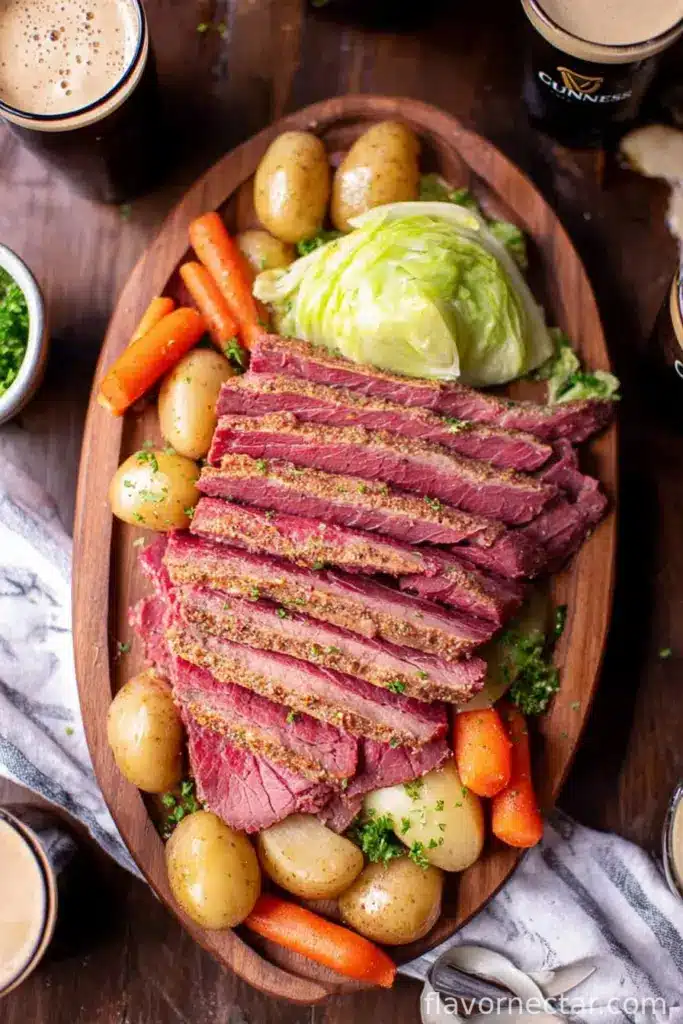
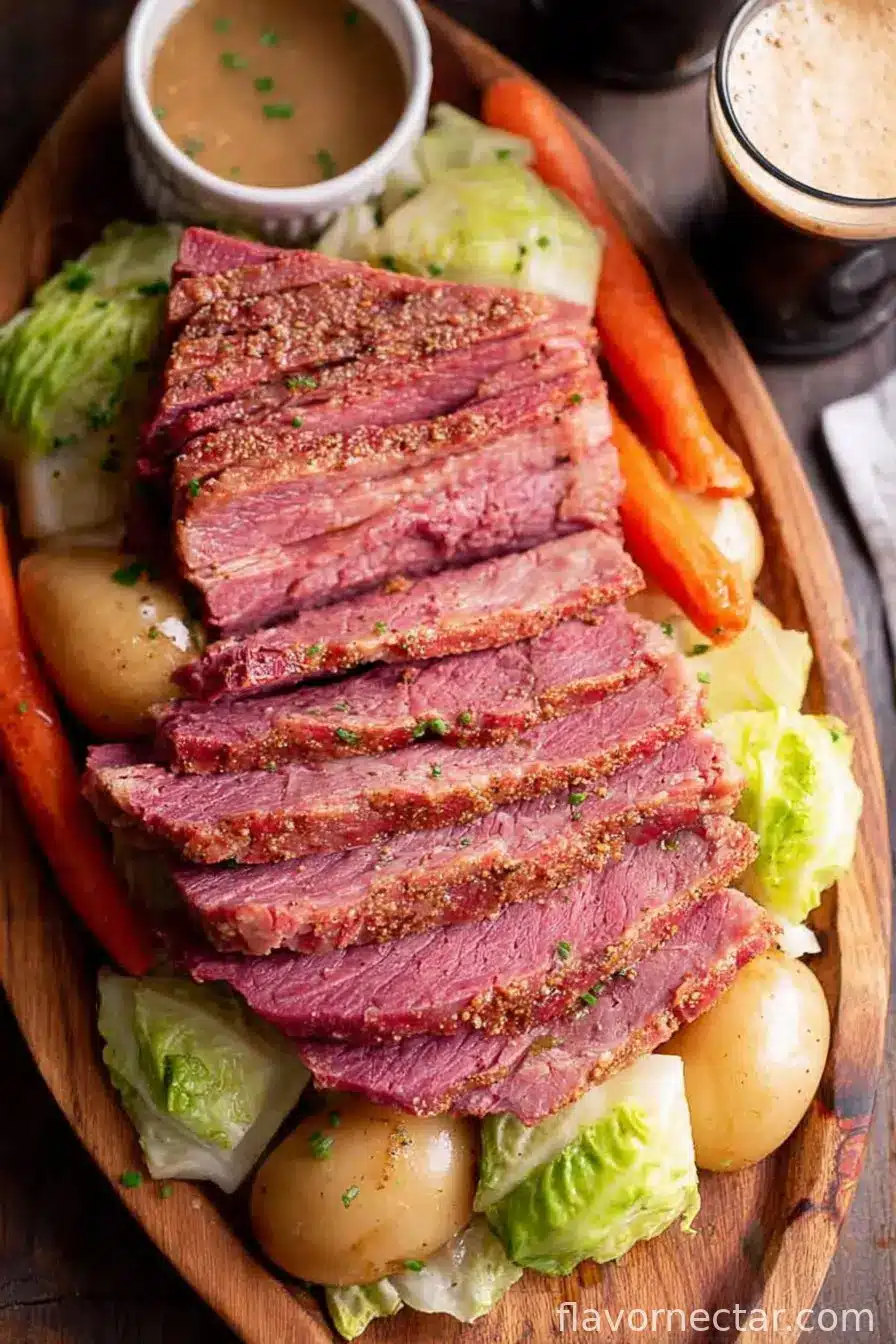
- Slice up the beef across the grain (otherwise it can be a workout to chew). Serve with all those veg and a bit of the broth ladled over. Mustard is non-negotiable in my family, but to each their own!
Some Oddball Notes Worth Mentioning
- Actually, I find it works better if you don’t poke or prod the beef too much—let it be!
- If the top dries out a bit, ladle some broth over now and then. Or just cover it better—just saying.
- The leftovers? Seriously, sandwiches the next day. Especially with rye bread (if there’s any left by then, which is rare.)
- Don’t stress about cloudy broth—it just means all the good stuff has leached out.
Variations I’ve Tried (And a Fail or Two)
- Swapped sweet potatoes for regular ones once—honestly, the color was odd, but the taste worked if you like sweeter over savory.
- I once dumped in some dark brown sugar, thinking it’d add depth. It mostly made things too sweet. Wouldn’t really recommend—unless you’re feeling experimental (in which case, go for it and report back!).
- Subbed in red cabbage for green because I grabbed the wrong one: weirdly, decent, just bolder flavor.
Gear You’ll Need (And What to Do if You Don’t Have It)
- Big stockpot—or Dutch oven. If all you’ve got is a big saucepan, just cram things in and add water as you go; did that for years at college.
- Sharp knife for slicing.
- Ladle. But a coffee mug will do in a pinch. (Yes, I’ve done this.)
How To Store This (Though Good Luck Having Leftovers…)
If, and that’s a big if, you have leftovers, I just toss them in a container in the fridge—good for a couple days, though, in my house, it’s usually polished off before day two rolls around. Reheats pretty well, but keep a bit of broth on the side so it stays juicy.
Serving It Up—The Family Way
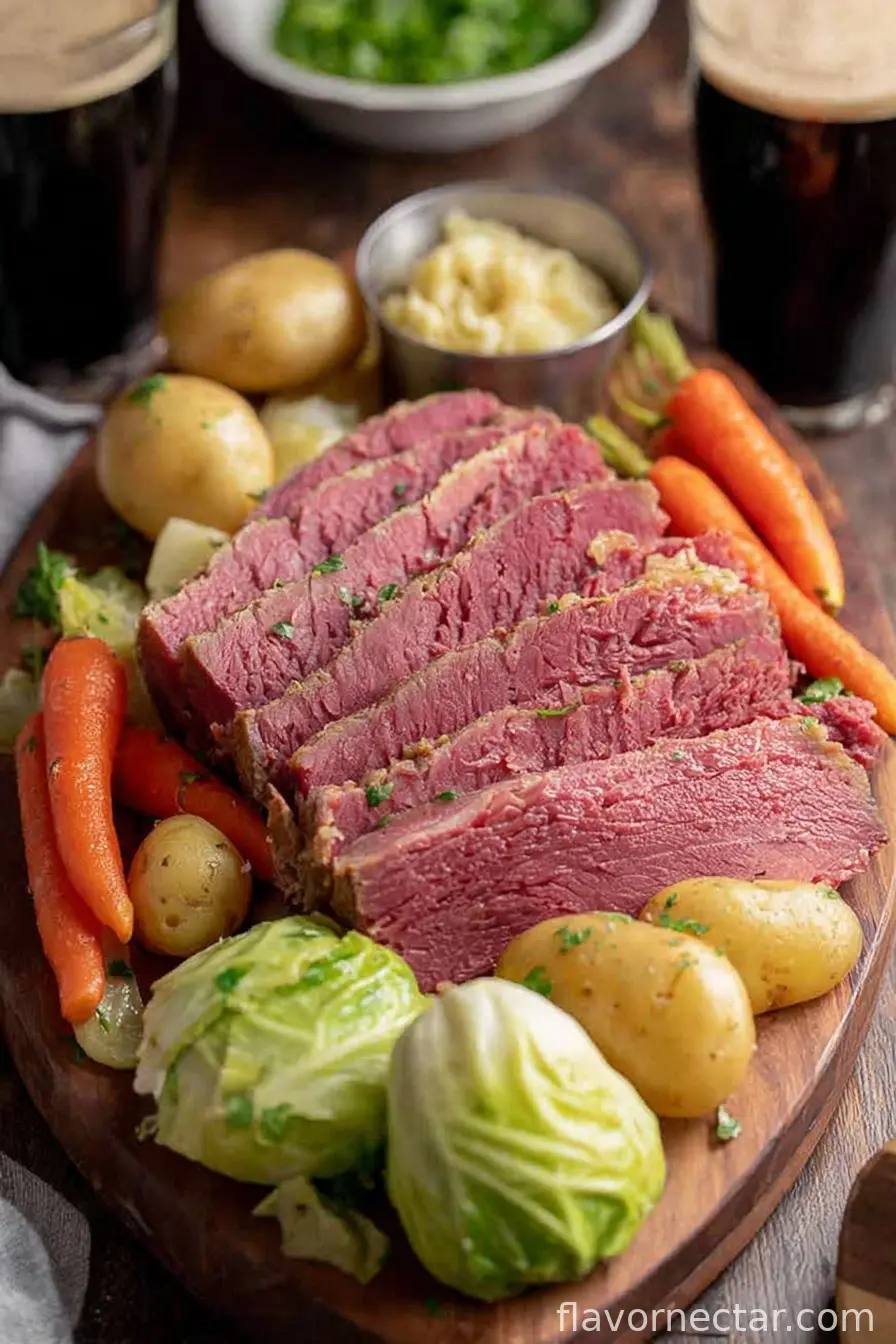
We usually plop the whole lot on a platter, beef in the middle, veg all around. My sister insists on a little ramekin of extra mustard (fancy!) and I sneak a splash of vinegar over my cabbage, but that’s totally up to you. Pile it on a sandwich the next day. There’s really no wrong way.
Things I’ve Learned The Hard Way (So You Don’t Have To)
- Don’t rush the simmering. I once tried to crank the heat thinking it’d save time. Result: dry, sad beef. Slow is truly the way.
- Cabbage cooks a lot faster than you think. Add it too early, and it’s mushy city.
- If the spice packet is missing, just wing it with peppercorns and a bay leaf. No one will notice (unless they’re a corned beef purist…in which case, run!).
Some “Real Life” Questions I’ve Gotten
- Can I do this in a slow cooker? Absolutely! Just layer everything in, beer first. Go low 7-8 hours. Add cabbage halfway through or it’ll vanish.
- Does it really have to be Guinness? Nah! Any decent stout works, or even just all water if you can’t do beer. The beef’s still tasty—just less malty.
- What if my meat looks gray? Perfectly normal at first; it gets pinker as it cooks (not sure of the science, but that’s how it goes).
- Can I freeze it? The beef, yes, but potatoes can get weird when thawed. But sometimes texture is just part of the charm, right?
- Is it normal for the broth to get cloudy and a little fatty? Absolutely. All the good bits mixing together—just skim off any big blobs if it bothers you, or embrace the rustic look!
- How far ahead can I make this? I tend to think it’s better the next day (more flavor!), so don’t stress if you need to make it ahead.
Oh—one last thing, and not really advice, but more a random note: If you happen to drop a carrot on the floor while chopping, that’s just kitchen tax. My dog agrees.
Ingredients
- 1 (3-4 lb) corned beef brisket, with spice packet (or toss in your own handful of peppercorns if that’s missing—no big deal)
- 1 (12 oz) bottle Guinness stout (sometimes I use a random dark beer if I’m out—works fine, though don’t tell my Irish friend that)
- 4 cups water (tap is fine, unless your water tastes weird, then maybe filtered)
- 1 large onion, peeled & quartered (yellow or sweet—I never notice much difference, if I’m honest)
- 4 garlic cloves, smashed (though I’ve used pre-minced garlic in a pinch, it’s all good)
- 5-6 carrots, chunked (baby carrots if I’m in a real rush)
- 6-8 small potatoes, halved or quartered (whatever’s lurking in your bin—red, Yukon, even russets)
- 1/2 head green cabbage, cut into wedges (the other half usually ends up as next-day slaw)
- 2 bay leaves (once I used 3, but didn’t notice a difference; use what you’ve got)
Instructions
-
1Plop the corned beef (spice packet and all) into your biggest pot, fat side up. If it’s folded over on itself, that’s fine—I do it all the time.
-
2Pour in the Guinness, then add the water (enough to mostly submerge the meat—if it pokes out, just flip it halfway through). Toss in the onion, garlic, and bay leaves.
-
3Bring to a boil. This is where I usually start picking at the carrots—don’t ask why. Skim off any weird foam with a spoon (looks strange, but totally normal).
-
4Reduce heat right down, slap on a lid, and let it barely simmer for about 2.5 hours. Maybe longer if your beef is chunky. I usually check after 2 hours—if you can poke a fork in easily, you’re good.
-
5Add the potatoes and carrots. Simmer another 15 minutes.
-
6Slide in the cabbage wedges. Simmer 20 more minutes, just until it’s all tender (not mushy—unless you like that; my dad did, and we let him have the cabbage corner).
-
7Fish out the corned beef and let it rest on a board—10 minutes is plenty, though patience isn’t my strong suit here.
-
8Slice up the beef across the grain (otherwise it can be a workout to chew). Serve with all those veg and a bit of the broth ladled over. Mustard is non-negotiable in my family, but to each their own!
CLICK FOR NUTRITION INFO
↑
Approximate Information for One Serving
Serving Size:
1 serving
Calories:
640 caloriescal
Protein:
44 gg
Fat:
33 gg
Saturated Fat:
0g
Trans Fat:
0g
Cholesterol:
0mg
Sodium:
0mg
Potassium:
0mg
Total Carbs:
43 gg
Fiber:
0g
Sugar:
0g
Net Carbs:
0g
Vitamin A:
0
Vitamin C:
0mg
Calcium:
0mg
Iron:
0mg
Nutrition Disclaimers
Number of total servings shown is approximate. Actual number of servings will depend on your preferred portion sizes.
Nutritional values shown are general guidelines and reflect information for 1 serving using the ingredients listed, not including any optional ingredients. Actual macros may vary slightly depending on specific brands and types of ingredients used.
To determine the weight of one serving, prepare the recipe as instructed. Weigh the finished recipe, then divide the weight of the finished recipe (not including the weight of the container the food is in) by the desired number of servings. Result will be the weight of one serving.
Did you make this recipe?
Please consider Pinning it!